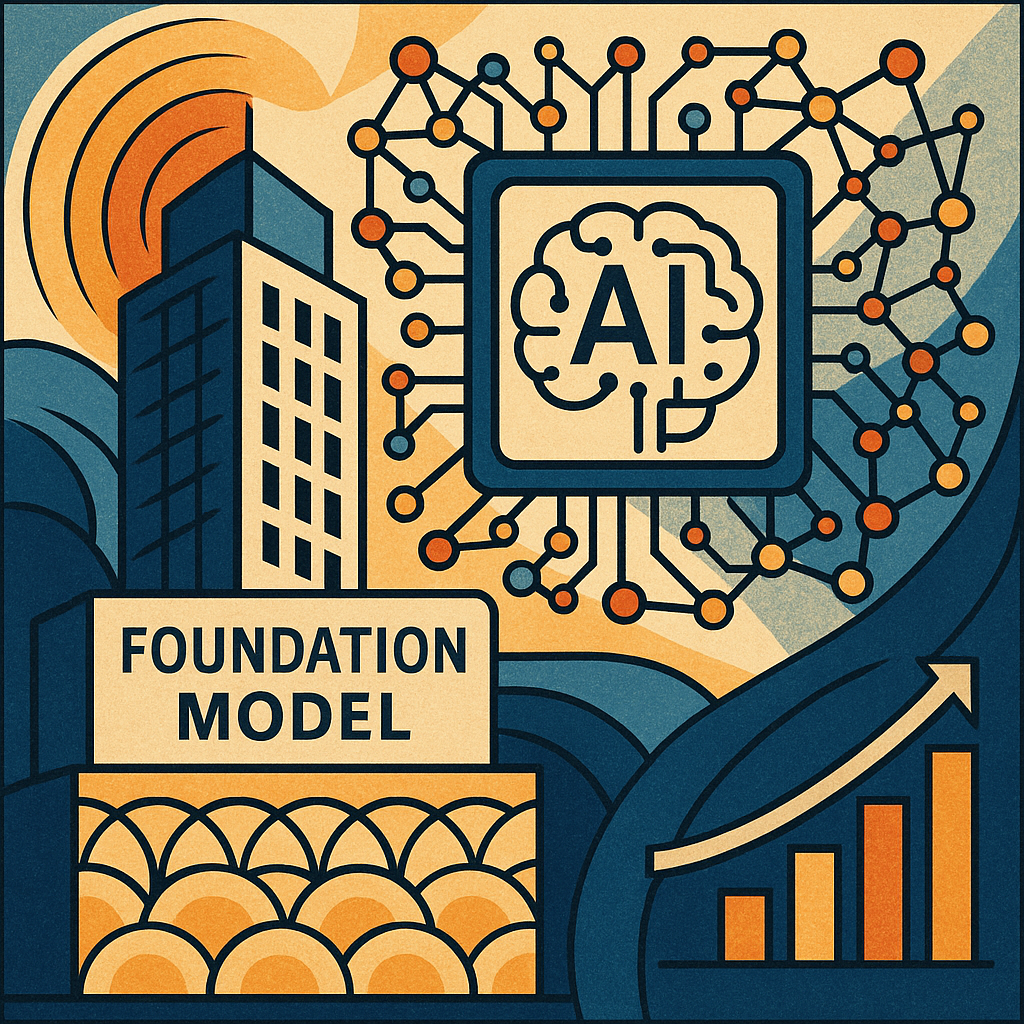
The conversation around artificial intelligence in early 2025 centered not on novelty, but maturity. Enterprises had begun moving beyond experimental deployments and into sustained production use of AI systems. The catalyst was the rapid evolution of foundation models—large, pre-trained models that could be adapted across domains with relatively little data.
From Custom Training to Strategic Adaptation
In 2023 and 2024, many organizations invested heavily in bespoke machine learning projects. Those efforts often stalled due to data scarcity, high costs, and talent limitations. By 2025, the most forward-thinking firms shifted their focus: rather than training models from scratch, they started adapting foundation models with domain-specific fine-tuning and retrieval-augmented generation (RAG) layers. This allowed them to combine general intelligence with proprietary data, reducing both time to value and operational risk.
The Rise of LLMOps
Operationalizing large language models introduced new challenges. Traditional MLOps pipelines weren’t designed for multi-billion parameter systems that evolve weekly. The term LLMOps gained traction to describe a new set of practices—version control for prompts, safety audits for responses, model routing, and continuous evaluation. Enterprises realized that success wasn’t about owning the largest model, but about maintaining responsible control over how those models behave and learn within organizational boundaries.
Cost Efficiency Through Architecture, Not Scale
Another key insight from 2025 was that efficiency didn’t come from smaller models—it came from smarter architectures. Companies learned to mix specialized smaller models (for compliance or reasoning) with large general models that handle linguistic fluency. The resulting hybrid systems achieved performance parity with monolithic models at a fraction of the cost.
Strategic Implications
For executives, the shift meant that AI strategy was no longer a question of “build vs. buy,” but “integrate vs. orchestrate.” The winning enterprises treated foundation models as platforms—core infrastructure upon which domain intelligence was layered. The organizations that thrived were those that built internal AI literacy, governance frameworks, and adaptive pipelines rather than betting everything on a single vendor or technology.
Conclusion
The quiet revolution of foundation models wasn’t about hype; it was about operational depth. Enterprises that embraced this architectural shift gained durable competitive advantages—not by chasing breakthroughs, but by integrating intelligence where it mattered most: in the fabric of their daily operations.